About the Fraction Subtraction Calculator
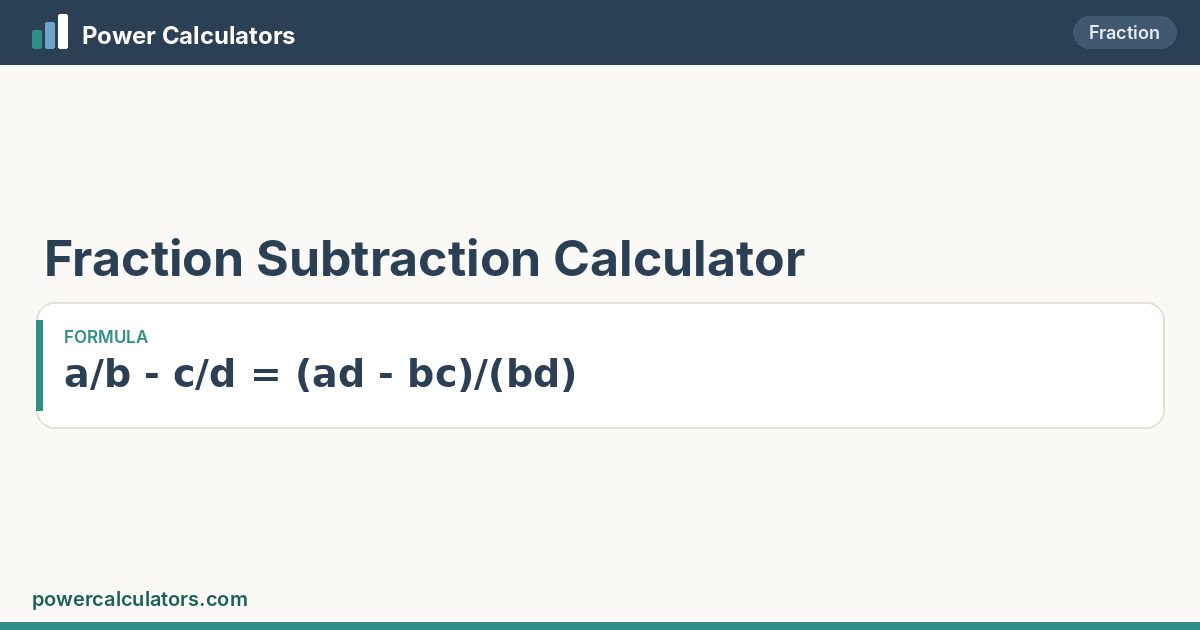
Keep the cross-multiplied denominator as a common denominator.
Subtract the cross-multiplied numerators.
A negative result is allowed.
Subtract one fraction from another and calculate the exact numerator, denominator and decimal result.
Log in or create a free account to save your inputs and results, so you don't have to enter them again next time.🔒 No spam, ever. We never sell or share your details, and you can delete your history or account at any time. Privacy policy
Fill in the details and click Calculate to see your results.
Keep the cross-multiplied denominator as a common denominator.
Subtract the cross-multiplied numerators.
A negative result is allowed.
| First Numerator | 3 |
| First Denominator | 4 |
| Second Numerator | 1 |
| Second Denominator | 6 |
| 3/4 − 1/6 | 7/12 |
| As a mixed number | 7/12 |
| As a decimal | 0.58(3) |
| As a percentage | 58.333333% |
7/12.
| First Numerator | 1 |
| First Denominator | 3 |
| Second Numerator | 1 |
| Second Denominator | 2 |
| 1/3 − 1/2 | -1/6 |
| As a mixed number | −1/6 |
| As a decimal | −0.1(6) |
| As a percentage | -16.666667% |
-1/6.
Multiply the first numerator by the second denominator, subtract the second numerator times the first denominator, then divide by the product of denominators.
Yes.
The product of the denominators is a valid common denominator.
Use a common denominator, subtract the numerators and simplify. 3/4 − 1/6 = 9/12 − 2/12 = 7/12.