About the Marathon Pace and Split Calculator
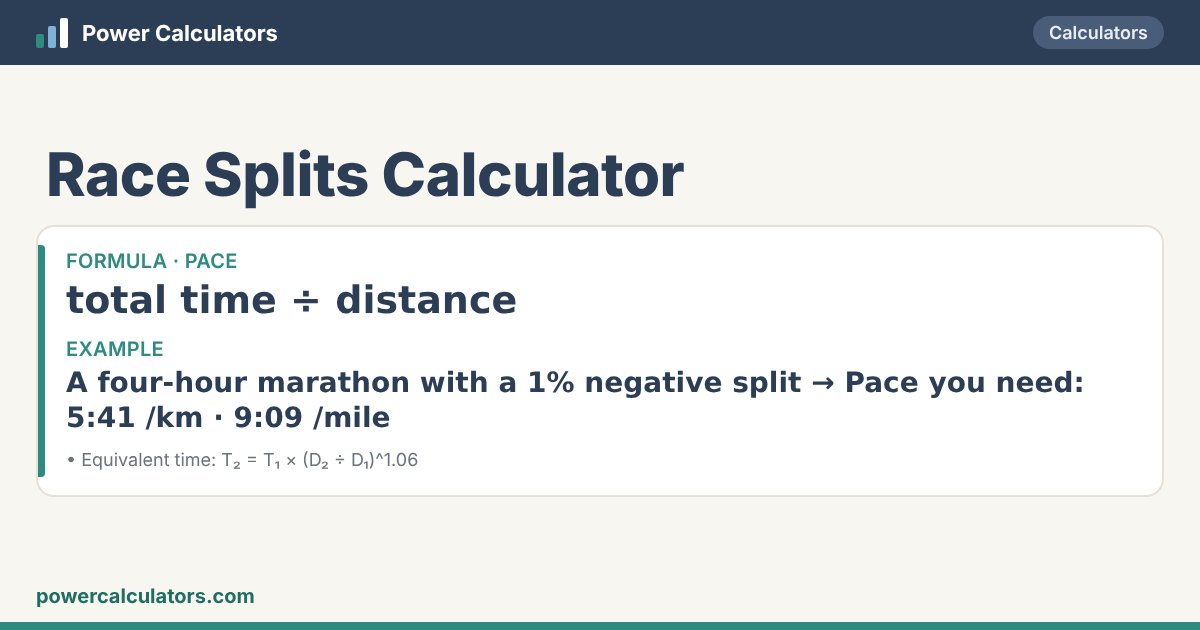
A finish-time goal only becomes useful when it turns into a pace you can feel and a time to see on your watch at each marker. Pace is simply total time divided by distance, and the split table below applies your chosen race plan to every checkpoint so you know what the clock should read.
Most personal bests are run as negative splits — the second half slightly faster than the first. The arithmetic is unremarkable; the reason it works is that going out too hard costs several times more in the last quarter than it gains in the first. A 1-2% negative split is what most coached marathon plans aim for.
The equivalent times come from Riegel's endurance formula, which converts a time at one distance to another by raising the distance ratio to the power 1.06. It is reliable between distances you have actually trained for and optimistic when you step up a long way — a quick 5K predicts a marathon time that only arrives with the marathon training behind it.